
Use email primitives according to direction: inbound routing, transactional delivery, or lifecycle marketing. Do not make one tool do all three jobs.
Default Decision
Section titled “Default Decision”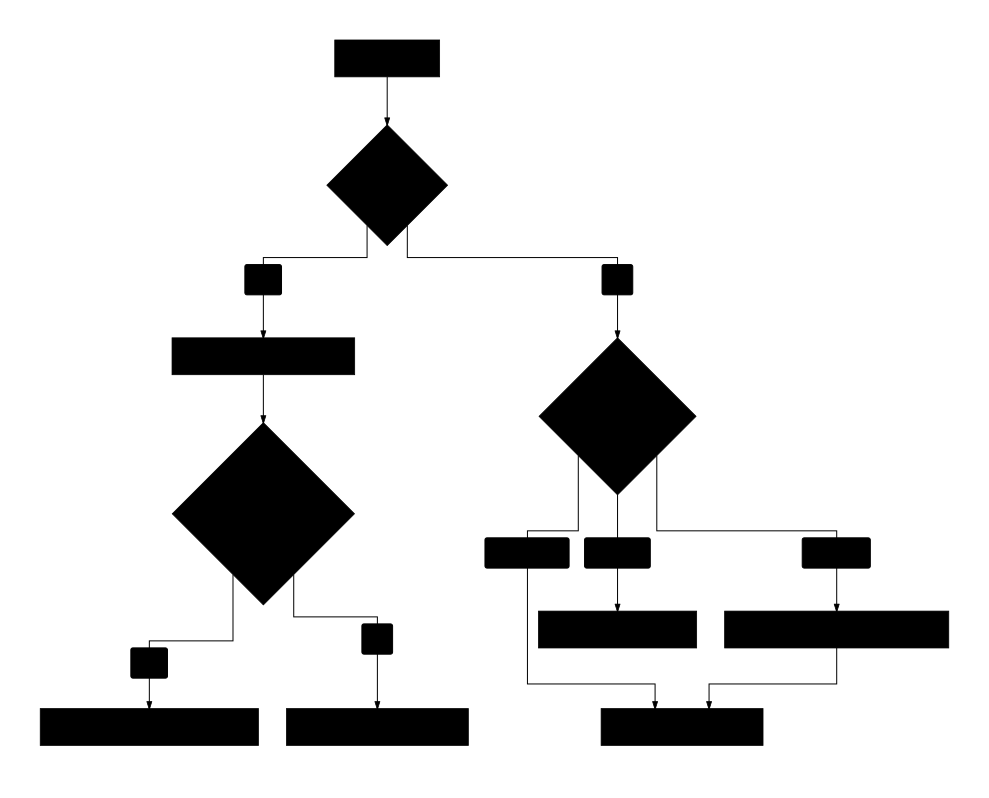
| Need | Default | Why |
|---|---|---|
| Inbound aliases and routing | Cloudflare Email Routing | Cheap, domain-native, simple forwarding |
| Inbound email workflows | Cloudflare Email Workers | Parse, validate, and broker email into app systems |
| Transactional outbound | Resend or Postmark | Better deliverability, templates, webhooks, and support |
| Lifecycle/marketing | Loops, Customer.io, or similar | Segments, campaigns, journeys, unsubscribe handling |
| Agent-triggered email | App/broker queue + approval policy | Prevents agents from directly sending arbitrary email |
Cloudflare Email Routing
Section titled “Cloudflare Email Routing”Use for:
- contact aliases like
hello@domain.com - forwarding role accounts to a human inbox
- lightweight support intake
- routing inbound messages to an Email Worker
Avoid for:
- product transactional mail
- newsletters
- marketing automations
- inbox/collaboration workflows
Email Workers Pattern
Section titled “Email Workers Pattern”Email Workers are the right primitive when inbound mail should become structured app data.
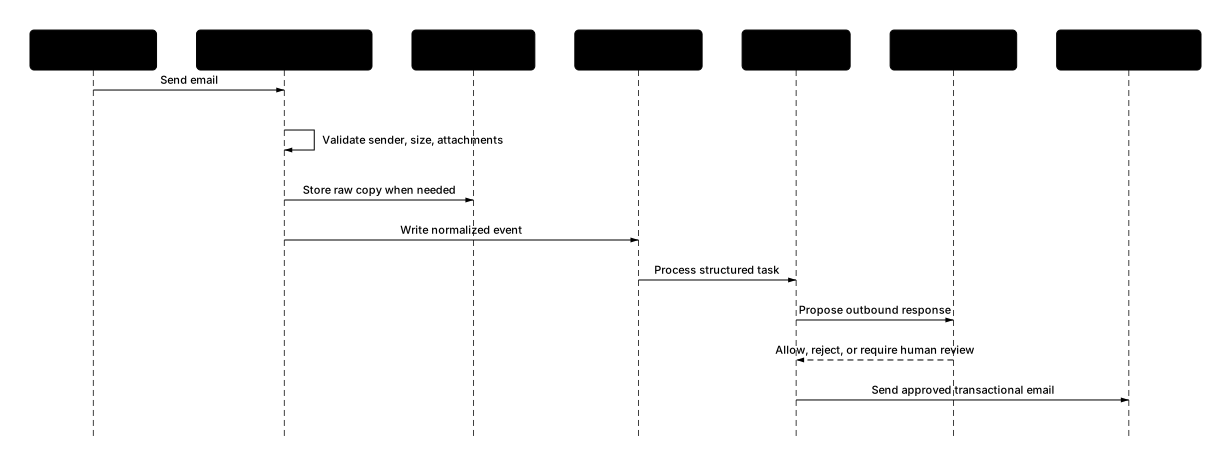
Inbound email→ Cloudflare Email Worker→ validate sender/domain/size/attachments→ optionally store raw `.eml` in R2→ write normalized event to Queue/D1→ app or agent processes structured taskRecommended safeguards:
- reject unexpected senders or domains early
- cap message size and attachment count
- store raw email in R2 only when needed for audit/debugging
- strip or sandbox HTML before display
- normalize email into a typed event before agents see it
- never expose mailbox credentials to agents
Transactional Outbound
Section titled “Transactional Outbound”Use Resend or Postmark for:
- verification emails
- magic links
- password reset
- invoices/receipts
- app notifications
- important user-facing delivery where bounces/webhooks matter
Keep provider keys server-only. Prefer Cloudflare AI Gateway BYOK for model keys, but email providers usually still require ordinary server secrets. Store them in Infisical/Bitwarden and sync only the needed runtime secret to the Worker.
RESEND_API_KEY=EMAIL_FROM=noreply@example.comAgent-Safe Outbound
Section titled “Agent-Safe Outbound”Agents should not call email providers directly. Put email behind application policy.
Agent proposes email→ app validates recipient/template/purpose→ optional human approval for external or high-risk recipients→ Queue job→ server-side sender uses Resend/Postmark→ delivery result written to audit logRecommended policy gates:
| Email type | Gate |
|---|---|
| internal test email | auto-allow in dev/staging |
| transactional email to current user | allow if template and recipient are fixed by app state |
| support reply draft | human approval before send |
| marketing/bulk email | marketing tool workflow, never raw agent send |
| unknown external recipient | human approval |
Deliverability Defaults
Section titled “Deliverability Defaults”For any domain that sends outbound mail:
- configure SPF
- configure DKIM
- configure DMARC, initially
p=none, then tighten later - use a dedicated sending subdomain when useful, e.g.
mail.example.com - monitor bounces and complaints
- keep unsubscribe handling for any non-transactional email
Cloudflare vs Email Provider
Section titled “Cloudflare vs Email Provider”Cloudflare should own inbound routing and edge workflows. Resend/Postmark should own outbound deliverability. Marketing tools should own campaigns and audiences. The app coordinates between them.